The short answer is that the store rebuilt bridal by treating it as a lead time problem rather than a product problem. When the special order vendor that supplied most of its longline and backless bodies stopped taking orders mid season, the owner did not start by shopping for a replacement. She started by listing every bride already on the books, sorted by wedding date, and worked out which ones were genuinely at risk.
Only after that triage did she buy. Replacement bodies were chosen against the specific gowns those brides had already bought, not against a general idea of what a bridal wall should hold. Lead time promises were rewritten to match what the new vendors could actually ship, and deposit terms were tightened so that a second vendor failure would not be paid for out of her own pocket.
This is a close reading of what she did, in order, and what it cost. The store is a single location doing roughly 200 bridal fittings a year alongside its everyday business.
What the vendor loss actually broke
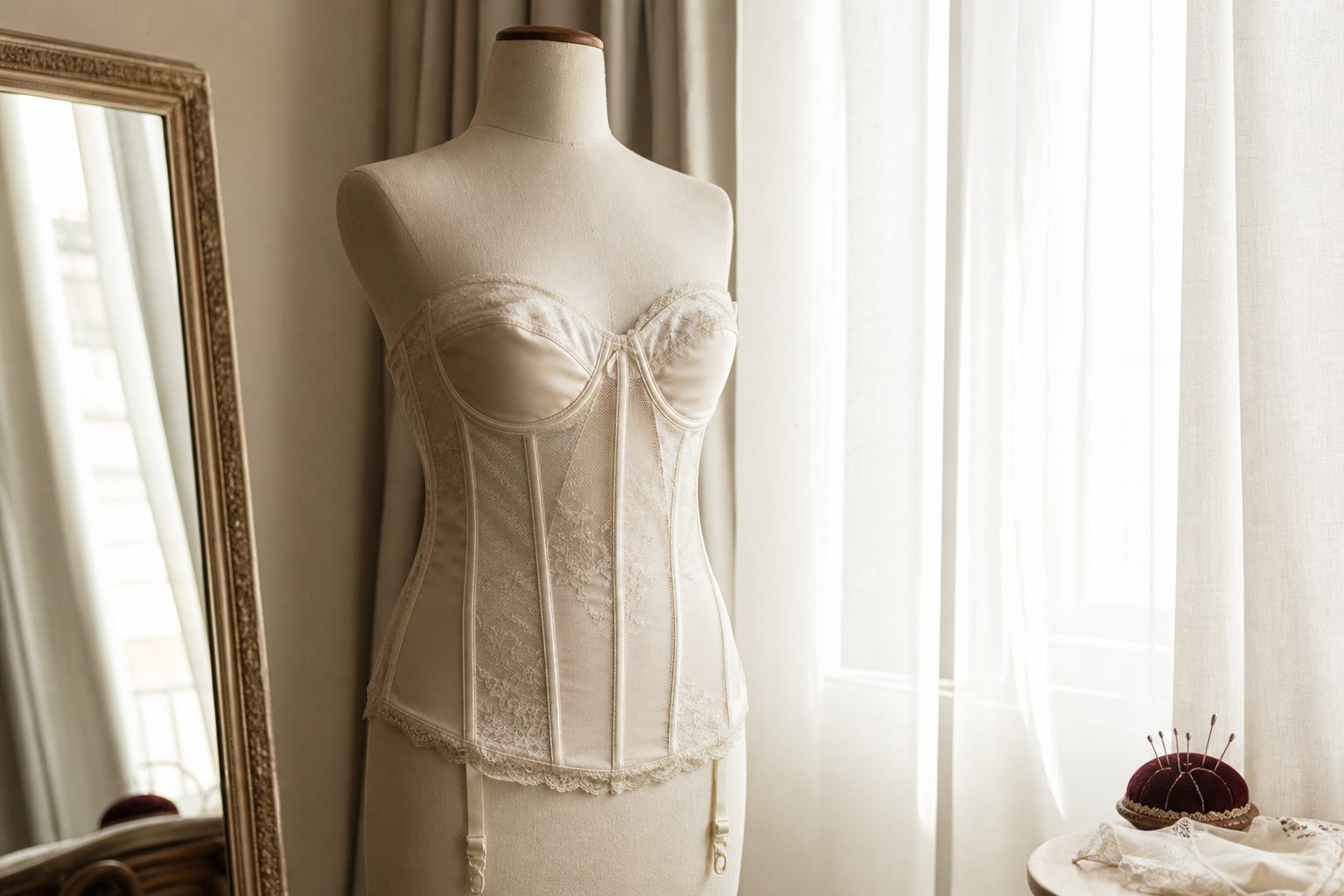
The vendor accounted for a modest share of unit volume and a large share of anxiety. Everyday bras were untouched. What went away was the special order book: longline bustiers in ivory, low back bodies, and the deep plunge constructions that sit under a gown neckline nothing off the wall will handle.
Three things broke at once.
- Open orders in the pipeline. Placed, deposited, unshipped, and now uncertain. Some had wedding dates inside eight weeks.
- The size ladder. The vendor cut a band and cup range that the store's replacement candidates did not fully match, particularly in the 32 and 34 bands at DD and above.
- The fitting knowledge. Years of notes referenced that vendor's styles by name. A fitter could read a customer record and know instantly what to pull. Overnight, half of that shorthand pointed at nothing.
The third loss is the one owners underestimate. Product can be replaced in a season. Institutional knowledge about which body works on which frame takes longer, and it only survives if it was written down against the customer rather than kept in a fitter's head.
Keep reading: Where is independent bra fitting actually heading as more brands sell direct online?
Triaging appointments already on the books
She built a single list, sorted by wedding date, with four columns: bride, date, what was ordered, and whether the gown had been altered yet. Then she assigned every row to one of three buckets.
| Bucket | Definition | Action |
|---|---|---|
| Red | Wedding inside 8 weeks, no garment in hand | Call the same week, offer an in stock substitute plus complimentary alteration |
| Amber | Wedding 8 to 20 weeks out | Hold, source a replacement body, re fit within 3 weeks |
| Green | Wedding beyond 20 weeks | No call yet, re fit at the normal appointment |
The rule that made this work was the alteration column. A bride whose gown had already been taken in around a specific bustier could not simply be handed a different silhouette. Those rows went red regardless of date, because the fix involved the seamstress, not just the fitting room.
Red brides got a phone call, not an email. The script was short: her order was affected, here is what the store will do, here is the date she will have something in hand. No explanation of the vendor's problems, because a bride nine weeks out does not care whose fault it is.
What the calls actually cost
Fourteen red brides, each offered a substitute plus alterations the store paid for. Assume an average alteration cost of $65 and an average margin give up of $40 on the substitute versus the original order. That is roughly $1,470 out the door. Those figures are illustrative of the store's own estimate, not an industry benchmark. Set against fourteen weddings where the bride and her party would otherwise have told the story badly, it was cheap.
Choosing replacement longline and backless bodies
The temptation was to find one vendor that did everything the old one did. She did not. She split the book deliberately.
The selection criteria she wrote down before the first appointment with a rep:
- Band and cup range must cover 30 to 40 bands, B through H cups, in at least the core ivory longline.
- The house must publish a real production lead time and a cutoff calendar, not a vague estimate.
- At least one body must be available from stock in the top six sizes, so that a rush bride is never entirely dependent on a special order.
- Ivory must be a true ivory that reads correctly next to the gown fabrics her market actually buys, checked in daylight against swatches, not on a screen.
- Minimum opening order under a figure she could clear in one season.
Criterion three changed the store's economics more than anything else. Holding a shallow but deep stock position, a small number of styles in a wide size run, meant that a bride at six weeks became a normal appointment rather than an emergency. The carrying cost was real, and it bought back the ability to say yes.
Fit knowledge got rebuilt at the same time. Every replacement style was fitted on staff and on willing regulars first, and the results were written into the customer records style by style: which frame it suited, where it ran short in the torso, which band it fit small in. Two months of that, and the fitters had a new shorthand.
Keep reading: What should be on my checklist before I take on a new bra brand for fall?
Rewriting lead time promises to brides
The old promise had been informal and generous, because the old vendor had been fast. The new promise was written down and printed on the order form.
The structure was three numbers, not one: production time, transit time, and a fitting buffer. If a house quotes eight weeks production and shipping runs a week, the store quotes twelve, because the bride needs two fittings after the garment lands and the seamstress needs the garment in hand before final alterations.
That buffer is the whole discipline. A store that quotes the vendor's number is quoting a date on which a box arrives at the back door, not a date on which the bride is ready. Those are different events and only one of them matters to her.
She also set a hard cutoff. Special orders stop at a defined number of weeks before the wedding date. Inside that window the answer is in stock only, with alterations. Brides accept a clear boundary far more easily than a soft one that slips.
Deposit and alteration terms that held up
The old terms took a deposit and left the balance vague. The new terms were built to survive a vendor failure, because she had just lived through one.
- Deposit at 50 percent, non refundable once the order is transmitted to the vendor, stated in plain language on the form and read aloud at signing.
- Balance due at pickup, not at the first fitting, so the store is not chasing money on a garment the bride has already taken home.
- Alterations quoted separately with a written range before work begins. Bridal alteration on a structured longline is skilled labor and pricing it into the garment hides its value.
- A substitution clause: if the ordered item becomes unavailable, the store may substitute a comparable body at equal or better quality with the customer's approval, and the deposit transfers.
That last clause is the one worth stealing. It converts a refund conversation into a fitting appointment. Without it, an unavailable order is a legal obligation to give money back. With it, the default is that the bride comes in and gets fitted again.
See how FitRoomLog handles this for lingerie and bra fitting boutiques
What the first full bridal season looked like afterward
Unit volume in bridal came back below the prior year. Margin did not, because the stock position meant fewer discounted rush fixes and fewer alterations absorbed by the store. Two vendors instead of one meant two order minimums and two cutoff calendars to track, which is more administrative work, and she considers it worth it.
The measurable change was in appointment shape. Brides were booked earlier, because the printed lead time gave the store a reason to insist. Second fittings were scheduled at the first appointment rather than left to be arranged. Fewer emergencies meant the fitting rooms ran on time, which quietly improved everything else in the store.
Her own summary was blunt. The vendor loss did not damage the business. It exposed that the business had been running on one supplier's speed and one fitter's memory, and neither was hers.
The lesson worth carrying
Vendor risk in special order bridal is not really about the vendor. It is about how much of your service promise depends on something outside your building, and how much of your fit knowledge exists anywhere other than in a person's head.
Write the promise as production plus transit plus buffer. Put a substitution clause on the order form. Hold a shallow, wide stock position so a rush bride is a normal appointment. And keep the fit knowledge where it survives a staff change or a vendor change: in the customer's record.
That last piece is what FitRoomLog is built for. Her true size, the brand and cut that worked, the date she last bought, all attached to her name rather than to a style number that may not exist next season. When a vendor disappears, you still know exactly who wore what, and you can call the right twenty brides in an afternoon.