A full Saturday teaches you that the schedule does not break when the store gets busy. It breaks at the moment one fitter is behind a curtain and a second customer needs something from the stockroom. Everything after that is queue.
What follows is a composite Saturday in a two room boutique with a fitter, an owner who also fits, and a part timer on the register from noon. It is written as a field account because the failure points only show up in sequence, not in a summary. The lesson at the end is a staffing ratio you can apply to your own floor.
Read it with your own appointment book open. The specific times will differ. The shape almost certainly will not.
Opening hour: prep, pulls and the appointment board
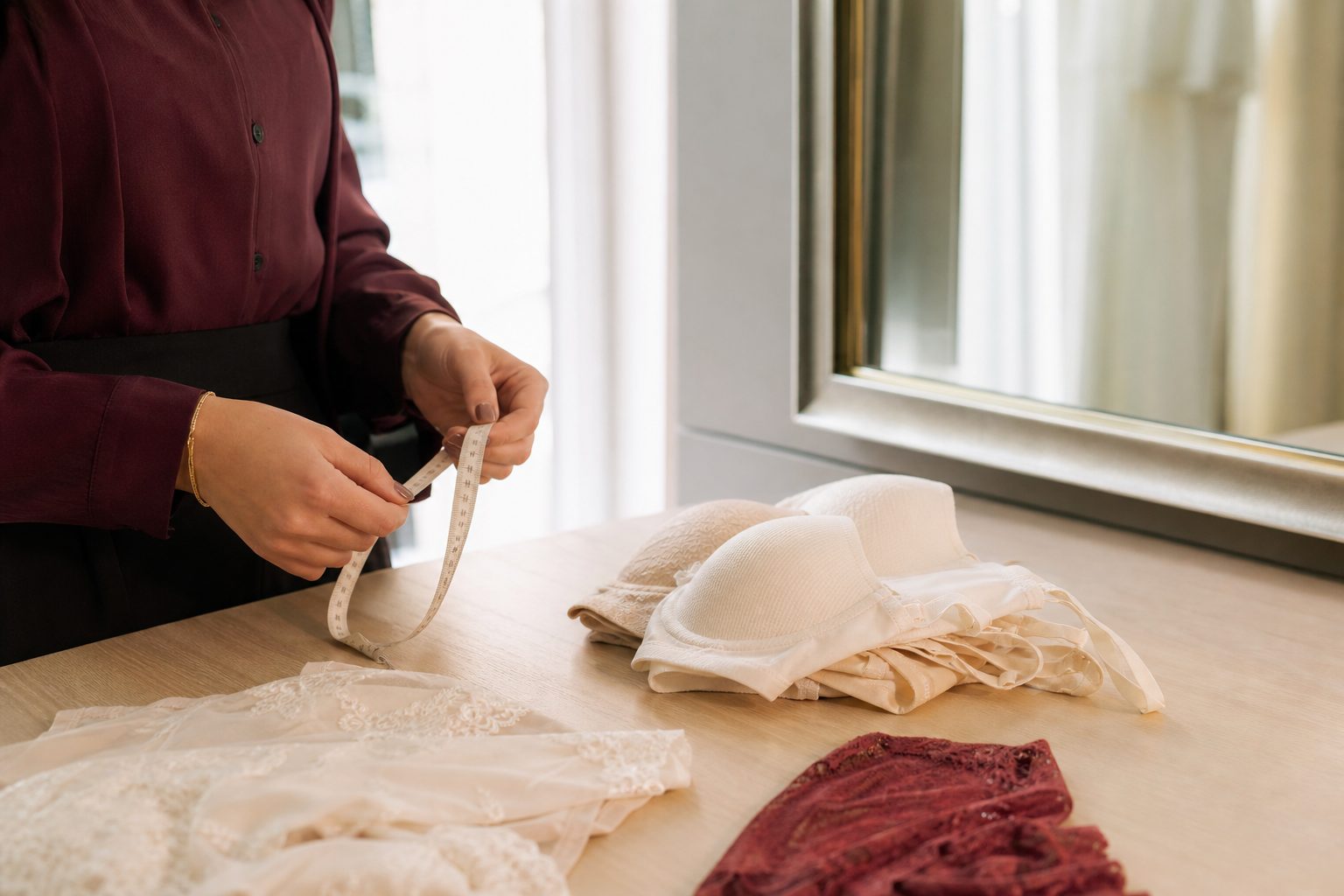
Doors at ten, staff in at nine fifteen. The first 25 minutes go to the floor: refolding the wall, returning yesterday's try ons to their sizes, and checking that the top selling sizes are actually where the label says they are.
Then the board. Six appointments booked across two rooms: ten, eleven fifteen, twelve thirty in room one, and ten thirty, twelve, one thirty in room two. Four are returning customers, two are new.
The returning four are the whole reason the morning works. Because their confirmed sizes and preferred cuts are already on record, the fitter can pre pull three pieces each before the door opens. Twelve pieces staged on a rolling rack, labeled by name. That preparation costs about twenty minutes and buys back roughly ten minutes per appointment later, which is the difference between finishing at one thirty and finishing at two fifteen.
The two new customers cannot be pre pulled. Nothing is known yet. Budget the full hour for each and stop pretending otherwise.
Keep reading: How do I actually measure a customer who has never been properly fitted before?
Late morning walk ins against booked fittings
By ten forty both rooms are occupied. At ten fifty a walk in comes through the door holding a bra in a bag and says the word every fitter recognizes: "it rides up."
This is the first decision of the day and it is a real one. Serve her now and the eleven fifteen appointment starts late. Book her for later and she may not come back, because Saturday is the day she had.
The practical answer that a busy store settles on is a triage rule, decided in advance so nobody has to improvise:
- Under five minutes and no room needed, for example a strap adjustment, a hook and eye question, a size confirmation on a piece she already owns: handle it at the counter now.
- A quick exchange in a size you already have confirmed for her: give her a room if one is free, otherwise ten minutes at the counter and the piece goes into her bag.
- Anything that requires a measure, a new brand or an unfamiliar shape: book it. Offer the next open slot today and, if there is none, the first slot on the next weekday.
The rule holds only if the person on the floor knows instantly which category the customer falls into, and that depends on whether her history is one lookup away or in a fitter's memory.
The stockroom run problem
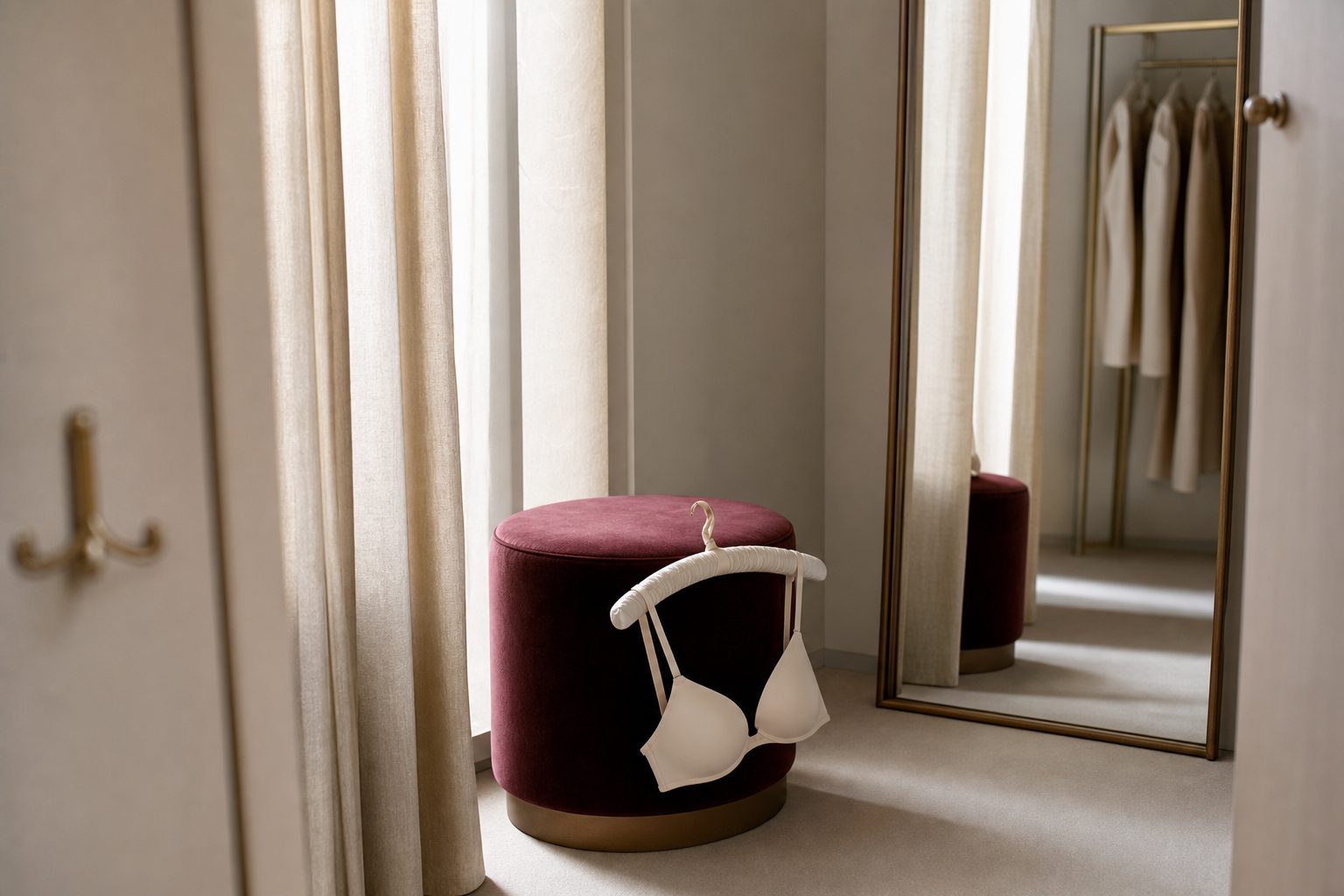
Eleven thirty. Room one is mid fitting, the customer has moved a cup up and needs the same style in a 34G. It is not on the floor. The fitter leaves the room.
The run itself takes ninety seconds. What it costs is closer to seven minutes: the customer waits half dressed, the thread of the conversation drops, and on the way back the fitter is stopped by a woman near the register with a question about gift cards.
Count these across the day. A busy Saturday in a two room store produces somewhere between twelve and twenty stockroom runs. At seven effective minutes each, that is 84 to 140 minutes, which is one and a half to two and a half fittings of lost capacity. Those are assumptions you should time yourself for one shift, but the order of magnitude holds in almost every store that tries it.
There are only three real fixes. Pull deeper before the fitting so the sister sizes are already in the room. Put a second person on the floor whose job includes fetching. Or move the fast moving sizes out of the stockroom and onto accessible back stock behind the counter. Most stores need two of the three.
Keep reading: Should I stock a deep core size range or chase more brands on my shelves?
Lunch coverage and the second fitter
Twelve to two is simultaneously the busiest window and the one where staff need to eat. That contradiction is where most independent schedules quietly fail.
If you have two fitters and both take lunch inside that window, you drop to one room for an hour at peak. If neither takes lunch, you have a fitter doing a delicate, physically close appointment at two in the afternoon on no food, and the quality of that fitting is not the same.
The workable version is staggered and short: one fitter eats twelve fifteen to twelve forty five, the other one fifteen to one forty five, and the part timer covers the register and the phone across both. Thirty minutes is enough if the person actually leaves the floor. It is not enough if they eat standing at the counter and get interrupted, which is what happens every time.
Block the lunch slots on the appointment board as if they were bookings. If they are not on the board, they get filled.
Afternoon peak and the wait list
Two to four is when walk in volume peaks and both rooms are booked solid. This is when a store either has a wait list or has a crowd.
A wait list is simple and it works: name, cell number, what she is here for, and an honest wait time. Then let her leave. Tell her you will text when a room opens and give her a window rather than a promise.
Two things make the difference between a list that converts and one that does not. First, honesty about the wait. Telling a customer twenty minutes when it will be fifty loses her twice, once today and once as a returning customer. Second, taking the size and brand information while she is standing there, so the pull can start before she comes back through the door.
If four or more people go on the list on a normal Saturday, that is not a busy day. That is a staffing signal, and it is telling you the same thing every week.
See how FitRoomLog handles this for lingerie and bra fitting boutiques
Closing paperwork and reorder notes
Doors at six, out by six forty. The temptation is to cash out, reset the floor and go home. The half hour that actually pays is the notes.
- Record the confirmed size and the brand and cut for every new customer fit today, while the fitter still remembers her shape.
- Note every piece a customer wanted that you did not have in her size. This is the single most valuable list the store produces and it is the one most often lost.
- Flag anything that hit its last unit in a top selling size so it goes on the reorder before Monday's open to buy conversation.
- Log wait list names that did not get served, with what they came in for, so somebody calls them Tuesday.
- Note the day's completed fittings per room, which is the number the staffing decision rests on.
Ten missed sizes across a Saturday, at a 78 dollar average retail, is 780 dollars of demand you already found and did not fill. Write it down and it becomes a buy. Do not write it down and it is just a busy day.
What the day says about hours per fitting room
Add it up. Two rooms across an eight hour trading day produce twelve to fourteen completed fittings on a strong Saturday. One fitter cannot run both rooms at that volume, because the stockroom runs alone consume close to two fittings of capacity.
The ratio the day supports is this:
| Rooms in use | Fitters on the floor | Support on register and stock |
|---|---|---|
| 1 | 1 | Optional on a weekday, needed on Saturday |
| 2 | 2 | 1 for the peak four hours |
| 3 | 3 | 1 all day, plus a stock runner at peak |
Put a cost on it. A support person at 18 dollars an hour for a six hour peak shift costs about 108 dollars plus payroll taxes, call it 120. That person needs to protect roughly two fittings from being lost to interruptions. At a 55 percent conversion and a 120 dollar average ticket across 1.6 pieces, two protected fittings are worth about 132 dollars in sales, and considerably more in gross margin terms over the year through the customers who came back because they were not kept waiting.
That is close enough that the decision does not rest on the arithmetic alone. It rests on whether your fitters can stay in the room.
Where the Saturday gets easier
Almost everything that went well in this day came from knowing something before the customer arrived: her size, her cut, what she bought last, what she asked for and did not get. Everything that went badly came from a fitter leaving the room to go find out.
FitRoomLog holds that history per customer so the morning pull is already staged, the counter triage takes seconds, and the size she wanted last month generates a message the day it lands. Bring your existing customer file across before your next Saturday and the board will run tighter by the one after.