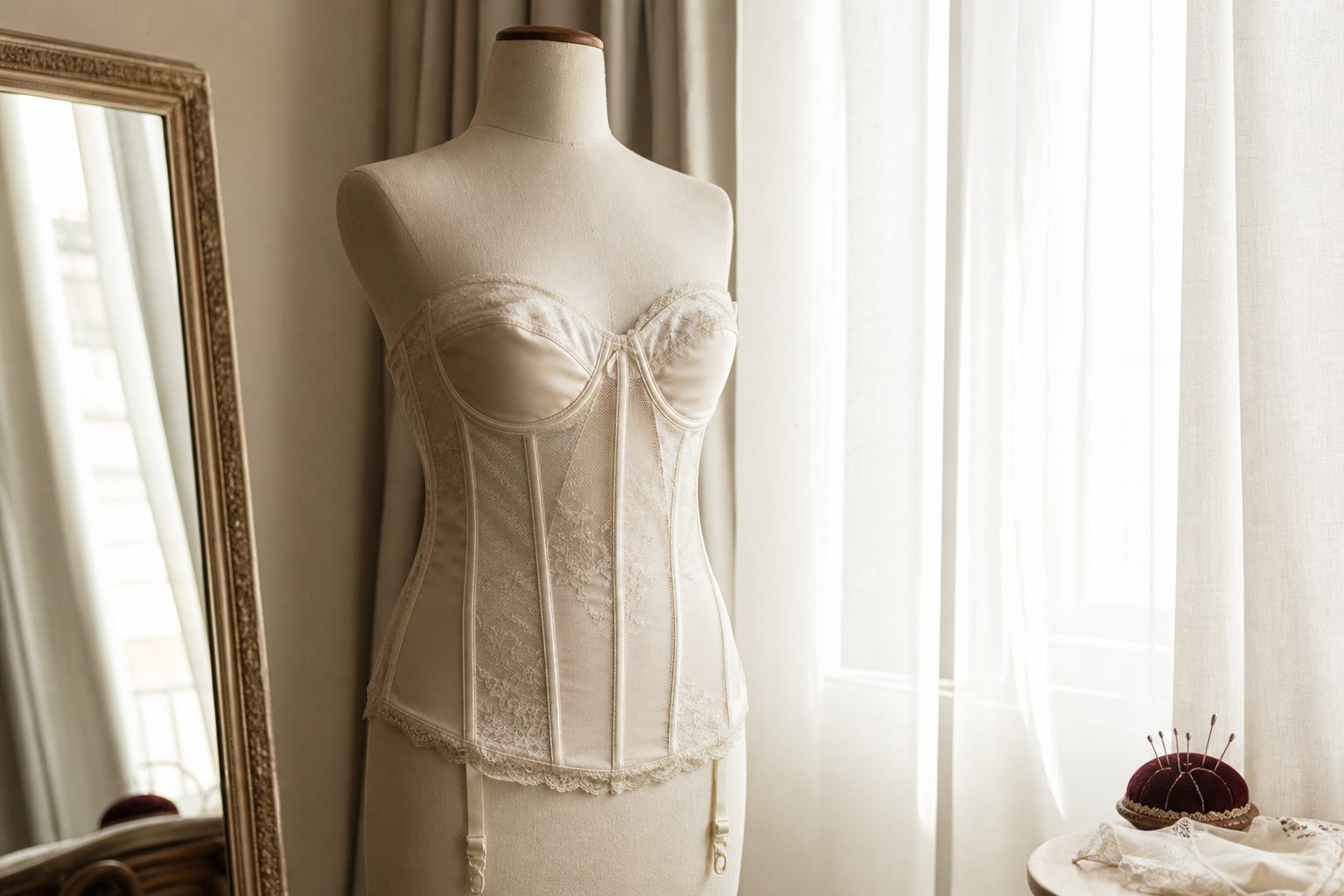
To bill insurance for mastectomy bras and breast prostheses, you need to become an enrolled durable medical equipment supplier. In practice that means an NPI, accreditation from a CMS approved accrediting organization, a surety bond, a Medicare enrollment through the CMS-855S application, and separate contracts with each commercial plan you want to accept. On top of that you need a valid order from a treating practitioner on file, a documented fitting record, and proof of delivery for every single item you bill.
None of that is optional, and none of it happens in a week. Most boutiques that add this line spend three to six months on paperwork before the first claim goes out. The reward is a category with real gross margin, a customer who returns every year or two, and referrals from oncology offices that no online retailer can intercept.
Here is how the pieces fit together, in the order you actually have to do them.
What the Women's Health and Cancer Rights Act does and does not require
WHCRA is the federal law most fitters have heard of and most fitters misread. It says that a group health plan or issuer that covers mastectomy must also cover breast prostheses and surgical bras, along with reconstruction and treatment of physical complications, including lymphedema. It applies to most employer sponsored plans and to individual market coverage.
What it does not do is set a dollar amount, a quantity, or a frequency. It also does not require the plan to pay you. WHCRA guarantees the benefit exists for the patient. It says nothing about whether your store is in network, and it explicitly allows the plan to apply the same deductibles and coinsurance it applies to other benefits.
So a woman can walk in holding a letter that says her prostheses are covered, and you can still be unable to bill for her, because you are not a contracted supplier with her plan. Getting that conversation right at the counter, before the fitting, saves you a chargeback and saves her a shock.
WHCRA also does not reach every plan. Medicare, Medicaid and some church or government plans sit outside it and follow their own rules. Medicare Part B covers prostheses and post surgical bras under its own prosthetic device benefit, which is where most of your volume will land if your customer base skews over 65.
Keep reading: How did one boutique rebuild its bridal business after losing its main special order vendor?
Becoming a supplier: NPI, accreditation and surety bond questions
The sequence matters, because each step depends on the one before it.
- Get an NPI. Apply through NPPES. You want a Type 2 organizational NPI for the business, and it is free. Your taxonomy code should reflect DME or, more specifically, the mastectomy supplier classification.
- Get accredited. CMS requires DMEPOS suppliers to be accredited by an approved accrediting organization against the DMEPOS quality standards. This is a real survey. Someone visits, looks at your policies, your complaint log, your intake forms, your storage, and your staff training records. Budget several months and a four figure fee.
- Post a surety bond. Medicare requires a $50,000 DMEPOS surety bond per NPI location. You buy this through a surety agent and the annual premium is a fraction of the face value, commonly a few hundred dollars for an applicant with clean credit, more if credit is thin.
- Enroll with Medicare. File the CMS-855S with your DME MAC, pay the enrollment application fee, and expect a site visit. Your store must meet the supplier standards, including posted hours, a physical location that is not a residence, and liability insurance.
- Contract with commercial plans. Each one separately. Some have closed DME networks and will simply say no. Ask the question in writing and keep the answer.
A useful shortcut on accreditation: some accreditors have a reduced pathway for suppliers whose scope is limited to mastectomy items only. Ask about it before you pay for a full DMEPOS survey you do not need.
The prescription and documentation you must hold on file
The claim is the easy part. The file behind it is what an audit reads. For every billed item you want to be able to produce, without hunting:
- A dated order or prescription from the treating practitioner naming the item, signed and legible, obtained before or at delivery depending on the payer's rule.
- Documentation supporting medical necessity, which in this category usually means the mastectomy itself, and dates of surgery.
- A fitting record: date, fitter, size and style dispensed, manufacturer, and the model or product number.
- Proof of delivery signed by the patient, with the date, the quantity, and a description that matches what you billed.
- Assignment of benefits and, where required, a Medicare supplier standards notice given to the patient.
Keep these for the retention period your payers require, which for Medicare purposes means years, not months. This is exactly the kind of record a fitting history system earns its keep on: you already capture the size, the style and the date at the fitting, so the documentation is a byproduct rather than a second job.
The re-order trap
The most common documentation failure is not the first fitting. It is the replacement two years later, billed against a prescription that has aged out or a diagnosis that was never re-documented. Set a rule: no replacement claim goes out without a current order in the file, full stop.
Keep reading: Where is independent bra fitting actually heading as more brands sell direct online?
How HCPCS codes and quantity limits shape your ordering
The codes in this category are narrow and you will use the same handful constantly. The mastectomy bra sits at L8000. The bra with integrated prosthetic form sits at L8001 for unilateral and L8002 for bilateral. Silicone breast prostheses fall under L8030 and L8035 depending on type, with L8020 for the mastectomy form and L8010 for a mastectomy sleeve. Adhesive skin support for attachment is A4280.
Quantity and frequency limits are set by payer policy, not by law, and the Medicare limits published in the DME MAC local coverage determination are the ones most commercial plans imitate. Historically the pattern has been a limited number of bras per year and a silicone prosthesis replaceable only after a defined interval, with earlier replacement allowed for a documented change such as significant weight change, surgical revision, or damage not caused by misuse.
Do not take those intervals from memory or from a supplier's sales sheet. Pull the current LCD and related policy article for your DME MAC region and read the utilization section yourself. It changes.
Once you know the interval, your buying follows it. If a customer can get a set number of bras per benefit year, you want those styles in the sizes she actually wears, in stock, on the day she is eligible. Tracking her fit history and eligibility date turns a passive category into a scheduled one.
Medicare versus commercial plans in daily practice
| Practical question | Medicare Part B | Typical commercial plan |
|---|---|---|
| Who sets the price | Published fee schedule amount by state and code | Your negotiated contract rate, often a percentage of the fee schedule |
| Patient share | Part B deductible, then 20 percent coinsurance | Deductible, then copay or coinsurance per plan design |
| Prior authorization | Generally not used for these codes | Sometimes required, verify per plan |
| Network access | Open once enrolled and compliant | Closed networks are common, and being told no is normal |
| Timely filing | One year from date of service | Often 90 to 180 days, check each contract |
The single most useful daily habit is verifying benefits before the appointment, not after. A five minute eligibility check that confirms deductible status, DME coverage and your network status prevents the most expensive outcome in this business: a fitted, dispensed, non returnable item that nobody will pay for.
See how FitRoomLog handles this for lingerie and bra fitting boutiques
Cash pay and assignment decisions
Accepting assignment means you bill the payer, accept the allowed amount as payment in full, and collect only the patient's share. Not accepting it, where permitted, shifts collection to the patient and paperwork with it. For Medicare DMEPOS, participating suppliers accept assignment on all claims.
Run the arithmetic before you decide. Assume a silicone prosthesis with a wholesale cost of $180 and a cash retail of $420. If the fee schedule allowed amount in your state is $310, your gross margin on the insurance sale is $130 against $240 cash, and you carry the claim, the denial risk, and roughly 30 to 60 days of float. Those are illustrative numbers, not a quote, but the shape holds: insurance trades margin for volume and referral flow.
Where that trade pays off is the bra line. A customer who comes in for a covered prosthesis and gets fitted properly buys everyday bras, sleep bras and swim forms at full retail for the next decade. The claim is the door, not the business.
When outsourcing billing beats doing it in house
A billing service typically charges a percentage of collections, commonly in the range of 5 to 9 percent for a small DME book. Test it against your own cost. If your claim volume is 25 per month and each claim plus follow up takes 20 minutes of staff time, that is roughly 8 hours a month. At $22 an hour loaded, about $180. If those 25 claims collect $7,500, a 7 percent service costs $525.
In house looks cheaper, until you count denials. The real question is not hourly cost, it is whether anyone in your store will chase a rejected claim on day 45 while a bridal appointment is waiting. If the honest answer is no, outsource. Aged claims that nobody works are worth zero, and a 7 percent fee on money you actually collect beats 100 percent of money you do not.
Keep eligibility verification and documentation in house regardless. No billing service can fix a missing prescription or a fitting record that was never written down.
Where to start this month
Pull your DME MAC's current mastectomy LCD and read the utilization section. Call two accreditors and ask about a mastectomy only scope. Get a surety bond quote. Those three calls cost you an afternoon and tell you whether the timeline is realistic for your store.
Then get your fitting records in order, because everything downstream depends on them. FitRoomLog keeps each customer's true size, brand and cut notes, and purchase dates in one place, so when the replacement window opens you already know what she wore, what fit, and when she is next eligible. That is the same record your claim file needs, captured once, at the fitting, where it belongs.